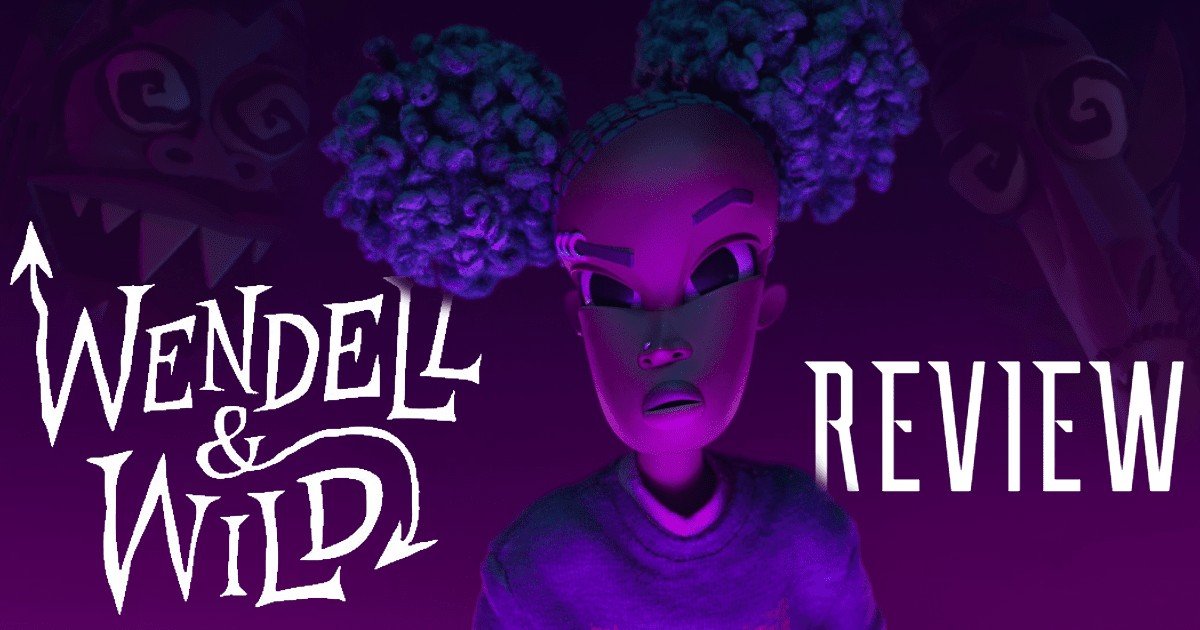
When two visionary storytellers from seemingly different corners of the cinematic universe collide, the result is often something truly unique. Such is the case with Wendell & Wild: Modern Collaborations & Themes, a film that masterfully blends the tactile artistry of stop-motion animation with sharp, contemporary social commentary. It's a journey into a delightfully demented world, born from the creative minds of stop-motion maestro Henry Selick and horror auteur Jordan Peele, offering a rich tapestry of visual genius and bold, resonant ideas that stick with you long after the credits roll.
This isn't just another animated flick; it's a statement. A vivid, punk-rock-infused narrative that tackles heavy themes like grief, systemic injustice, and corporate greed with a surprising blend of humor and genuine heart. If you're looking for an animated film that dares to challenge as much as it entertains, Wendell & Wild demands your attention.
At a Glance: What Makes Wendell & Wild Stand Out
- A Unique Partnership: The dream collaboration between stop-motion legend Henry Selick (known for The Nightmare Before Christmas and Coraline) and acclaimed director Jordan Peele (of Get Out and Us fame).
- Visually Stunning Stop-Motion: Combines traditional, tactile stop-motion animation with sophisticated CGI enhancements, creating a uniquely rich and dynamic world.
- Bold Thematic Swings: Explores complex subjects like grief, survivor's guilt, the flaws of the for-profit prison system, and corporate corruption.
- Diverse & Inclusive Characters: Features a diverse cast, including a punk-rock protagonist, a trans schoolmate, and an Indigenous case worker, promoting modern representation.
- Voice Acting Powerhouse: Stars Keegan-Michael Key and Jordan Peele as the titular demons, alongside an all-star cast including Lyric Ross, Angela Bassett, Ving Rhames, and James Hong.
- An Energetic Ride: Despite its intricate plot, the film maintains a distinctive, often frenetic energy reminiscent of Selick's earlier works, though with a distinctly modern edge.
The Unlikely Architects: Henry Selick's Artistry Meets Jordan Peele's Vision
At the heart of Wendell & Wild lies a collaborative partnership as intriguing as the film's premise itself. On one side, you have Henry Selick, a name synonymous with the magical, meticulously crafted world of stop-motion animation. His past projects, particularly The Nightmare Before Christmas and Coraline, have cemented his legacy as a master of the form, capable of evoking both wonder and genuine chills through painstakingly animated puppets and sets. Selick brings an unparalleled understanding of how to make physical objects breathe with emotion and narrative purpose, transforming static figures into dynamic storytellers. If you've ever been captivated by the gothic charm and intricate detail of his previous works, you'll find much to admire in this latest venture. For a deeper dive into his remarkable career, explore All Henry Selick movies.
Then there's Jordan Peele, a singular voice who has rapidly reshaped modern horror cinema with his incisive, socially conscious thrillers. Peele’s films are not just scary; they're thought-provoking allegories that delve into systemic racism, societal anxieties, and the complexities of identity. His involvement in Wendell & Wild isn't just as a voice actor (lending his distinct comedic timing to Wild); he's also a co-writer and producer, imbuing the narrative with the thematic depth and sharp critique that have become his signature.
This collaboration is less about a clash of titans and more about a synergistic fusion. Selick provides the breathtaking visual canvas and the meticulous craft, while Peele injects a potent shot of contemporary relevance and a keen understanding of horror's potential for social commentary. Together, they create a film that feels both timeless in its animation style and utterly current in its message. It's a testament to how creative minds can converge, pushing the boundaries of what animated storytelling can achieve when bold artistic vision meets a clear, resonant purpose.
Crafting a Demented Dreamscape: The Visual Language of Stop Motion
Wendell & Wild is, at its core, a visual feast. The decision to use stop-motion animation immediately sets it apart in a landscape dominated by CGI. This tactile, handcrafted approach gives the film a unique texture and weight, making every character, every prop, and every crumbling building in the town of Rust Bank feel tangible and real. You can almost feel the fabric of Kat's punk attire, the rough edges of the demons' skin, or the dampness of the fog-laden air.
However, this isn't your grandparent's stop-motion. Selick and his team pushed the boundaries by seamlessly integrating CGI enhancements. This allowed for more complex camera movements, dynamic environmental effects, and a fluidity that traditional stop-motion alone often struggles to achieve. The result is a hybrid style that retains the charm and artistry of the analog while benefiting from the scope and scale made possible by digital tools. It's truly stunning work, creating a demented yet gorgeous aesthetic that feels both familiar and entirely new.
The Unseen Hands: Production Design Under Pressure
Behind these breathtaking visuals lies the meticulous work of co-production designers and an army of talented artists. Their task was to define the film's final visual appearance, from the expansive skies to the most minute environmental details. The world of Wendell & Wild is not static; it lives and breathes through its color palettes and atmospheric progression. Imagine the shift from clean blue skies to murkier purples as darkness and demonic influence descend, or the high-contrast night sky that heralds Buffalo Belzer's rise. These transitions aren't arbitrary; they’re carefully charted through "colorkeys" and "cloud maps" that serve as a visual script for the film's emotional and narrative beats.
The production journey itself was fraught with challenges, notably the impact of the pandemic and the Oregon wildfires. These external factors meant a heavier reliance on bluescreens and extensive post-production visual design to achieve the desired look. Artists created "paintovers" of filmed plates, enhancing mood with digital fog, mist, and meltwater reflectivity. For instance, increasing the fog thickness in the golf course murder scene wasn't just aesthetic; it was a deliberate choice to create a more sinister, obscuring cover. Similarly, for the void sequence where Kat first encounters Wendell and Wild, visual tests were conducted to perfect light rays, particles, and depth-of-field effects, transforming a simple meeting into an otherworldly encounter.
Even the smallest details were considered, like the proposed shift from yellow to green hues in the redemption chamber, accompanied by dust-kicking light beams to convey a sense of change and transformation. Graveyard scenes benefited from light beams dancing through trees and ground-level fog, adding depth and an ethereal quality. The visual design extends to every corner of Rust Bank, from clearing fog to reveal the town's desolation and bulldozers, to designing Belzer's dramatic rise to coincide with the first ray of sunlight. The final bulldozer battle, set during the first sunrise, was envisioned with smoke creating black clouds and soot, pushing the ambient light towards fiery reds – a truly grand climax.
The Persona of a Punk: Character Design by Pablo Lobato
Integral to the film's visual identity are the distinctive character designs by Pablo Lobato. His work, particularly on the protagonist Kat, defines her punk rock aesthetic: green hair, eyebrow piercings, and combat boots. This isn't merely a stylistic choice; it's a visual manifestation of Kat's rebellious spirit, her defiance against a world that has dealt her immense tragedy, and her journey through grief and self-blame. Lobato’s designs bring a modern edge to the stop-motion medium, making the characters instantly recognizable and powerfully expressive, even among a cast of fantastical creatures like Hell Maidens and Bearz-a-bubs. This attention to detail ensures that even the most outlandish characters carry a visual narrative that complements the film's deeper themes.
Beyond the Spectacle: Unpacking the Film's Bold Themes
While Wendell & Wild dazzles with its visuals, its true depth lies in its willingness to tackle themes typically reserved for live-action drama. This isn't a story content with simple good-versus-evil; it's a nuanced exploration of real-world issues filtered through a darkly fantastical lens.
The Weight of Grief and Survivor's Guilt
At its emotional core, the film grapples with profound grief and survivor's guilt. We meet Kat as a 13-year-old orphan, blaming herself for her parents' death five years prior in a car accident. This trauma manifests in her rebellious exterior, her isolation, and her profound longing to undo the past. Her deal with Wendell and Wild – to bring them into the Land of the Living in exchange for the reanimation of her parents – is a desperate attempt to rectify what she perceives as her greatest failure.
The film handles this delicate subject with sensitivity, portraying Kat's internal struggle not as a weakness, but as a driving force. It explores how grief can warp perception and lead to self-destructive tendencies, but also how confronting that grief can be a pathway to healing and finding a new kind of family. Her journey is a poignant reminder that true healing often requires facing the past, not escaping it.
A Scathing Critique of the For-Profit Prison System
Perhaps the most potent and overtly modern theme in Wendell & Wild is its fierce anti-corporate messaging and its critique of the revolving door prison system. The villainous Klax Korp isn't just a generic evil corporation; it's an entity driven by profit, specifically aiming to build a for-profit prison in Kat's crumbling hometown of Rust Bank. This narrative thread exposes the insidious nature of corporations that exploit suffering for financial gain, perpetuating cycles of poverty and incarceration.
In the underworld, Wendell and Wild are introduced performing prison labor for their demon father, Buffalo Belzer, who runs an amusement park of the damned. This parallel isn't accidental. It cleverly draws a connection between literal demonic servitude and the dehumanizing realities of real-world incarceration, particularly within a system designed to profit from human lives. The film highlights the injustice and moral bankruptcy of such a system, making a powerful, unmistakable statement against carceral capitalism. It's a bold move for an animated film, delivering a message that's both timely and deeply unsettling.
Redemption, Responsibility, and Rebuilding
Beyond individual guilt and systemic critique, Wendell & Wild also explores themes of redemption and responsibility. The titular demons, initially driven by selfish desires to build their own theme park, must eventually confront the consequences of their actions and learn to work for a greater good. Kat, too, moves beyond her singular focus on her parents' resurrection to embrace a broader responsibility for her community and her new friends. The film subtly suggests that true redemption isn't about escaping punishment, but about making amends and contributing to positive change. It's about rebuilding, both personally and communally, even when the foundations seem entirely broken.
A Cast of Characters, A Chorus of Voices: Diversity and Representation
One of Wendell & Wild's undeniable strengths is its commitment to diverse and inclusionary characters, a refreshing departure for a genre that sometimes lags in this area. The film doesn't just feature diverse characters; it integrates their identities seamlessly into the fabric of the story, making them feel authentic and essential.
- Kat Elliot (Lyric Ross): Our punk-rock protagonist is a Black girl grappling with immense trauma. Her identity isn't a token; it's interwoven with her strength, resilience, and unique perspective as an outsider in a predominantly white, oppressive system. Lyric Ross brings a raw, powerful voice to Kat, embodying her defiance and vulnerability.
- Raul (Sam Zelaya): Kat's trans schoolmate Raul is another beacon of modern representation. Raul's gender identity is presented naturally, without excessive fanfare or explanation, simply as a part of who they are. This normalizes trans characters in mainstream animation, offering positive visibility for young audiences. Sam Zelaya's voice acting gives Raul a grounded, supportive presence.
- Ms. Hunter (Tantoo Cardinal): Kat's Indigenous case worker provides another layer of diversity. Ms. Hunter is portrayed as a wise, empathetic figure who understands Kat's struggles and offers guidance rooted in a different cultural perspective, further enriching the film's world-building and demonstrating a thoughtful approach to character development.
- The Stellar Voice Cast: Beyond the core trio, the film boasts an impressive ensemble. Keegan-Michael Key and Jordan Peele, reunited, bring their signature comedic genius to Wendell and Wild, making these mischievous demons surprisingly endearing despite their selfish motives. Angela Bassett lends her powerful voice to a nun with a secret, adding a layer of mystery and gravitas. Ving Rhames is perfectly cast as the booming, intimidating Buffalo Belzer. Even legendary actor James Hong contributes as the school headmaster, showcasing the depth of talent involved. This diverse and experienced cast elevates the material, giving each character a distinct personality and emotional resonance.
This thoughtful approach to representation is not just about ticking boxes; it's about reflecting the real world, ensuring that a broader audience can see themselves reflected on screen, and adding richer, more nuanced perspectives to the narrative. It's a clear signal that modern animation can and should champion inclusivity without sacrificing storytelling quality.
The Art of Animated Storytelling: Why Wendell & Wild Resonates (and Where It Challenges)
Wendell & Wild is a film that demands to be seen through a particular lens: one that appreciates ambition, visual artistry, and thematic courage, even if the execution isn't always perfectly smooth. It certainly echoes the "gorgeous, demented visuals" and "bold thematic swings" seen in earlier works like The Nightmare Before Christmas and Coraline, films that similarly defied easy categorization and offered a darker, more complex animated experience. Selick's signature style of blending the macabre with the magical is clearly present, giving the film a familiar yet fresh appeal.
However, the film's ambitious scope sometimes leads to a "convoluted story and fuzzy world-building," as some critics have noted. With multiple plotlines involving two demons, an orphaned girl, an evil corporation, an underworld full of creatures, and a desperate deal, the narrative can occasionally feel overcrowded. The intricacies of the underworld's rules or the precise motivations of every secondary character aren't always crystal clear, which might leave some viewers feeling a bit lost amidst the visual splendor.
Yet, this narrative density can also be viewed as a strength, inviting multiple viewings and deeper analysis. It's a film that trusts its audience to piece together its complex puzzle, rather than spoon-feeding them every detail. It doesn't shy away from ambiguity or the messiness of its characters' lives, which aligns perfectly with its mature themes. Ultimately, the film’s sheer audacity—its willingness to tell such a complex, socially charged story through the painstaking medium of stop-motion—is what makes it resonate so strongly. It reminds us that animation is not merely for children, but a powerful artistic medium capable of tackling any subject with depth and sophistication.
Navigating the Narrative: Addressing Complexities and Criticisms
No film is without its critics, and Wendell & Wild certainly faced some observations regarding its narrative complexity. While praised for its visuals and themes, the film's "convoluted story" and "fuzzy world-building" were points of discussion. Let's unpack what this means and why it's not necessarily a detraction from the film's overall impact.
The Ambitious Plot: A Double-Edged Scythe
The film weaves together several distinct narrative threads: Kat's personal grief and her quest to resurrect her parents, Wendell and Wild's entrepreneurial ambition to build a theme park, Buffalo Belzer's underworld dominion, and the overarching threat of Klax Korp's for-profit prison scheme. Each of these elements is rich with potential, but their interweaving can occasionally feel dense. Characters' motivations shift, new magical rules are introduced, and alliances change, all within a brisk runtime.
For some viewers, this intricate tapestry might require a high degree of attention, potentially feeling overwhelming on a first watch. Unlike simpler narratives, Wendell & Wild doesn't always provide clear-cut answers or a straightforward antagonist. The lines between good and evil are blurred, and even the titular demons operate in a moral gray area. This complexity is characteristic of Jordan Peele's work, where narratives often serve as allegories that reward deeper thought rather than offering immediate gratification.
World-Building: Less Exposition, More Immersion
The "fuzzy world-building" critique often points to the film's tendency to drop viewers directly into its fantastical settings without extensive exposition. We meet Hell Maidens and Bearz-a-bubs without a full glossary of the underworld, and the precise mechanics of demonic resurrection or the extent of Kat's powers are learned through experience rather than explanation.
However, this approach can also be seen as an intentional choice to create a sense of immersion and discovery. Rather than pausing the narrative for lengthy explanations, the film trusts its audience to infer rules and absorb details visually. It allows the world to unfold organically, mirroring Kat's own journey of understanding the supernatural forces around her. While it might leave some questions unanswered, it ultimately prioritizes narrative momentum and visual storytelling, inviting viewers to lean in and engage actively with its unique universe.
In essence, the criticisms often stem from the film's sheer ambition. Selick and Peele weren't interested in making a safe, easily digestible animated feature. They wanted to create something sprawling, challenging, and thought-provoking. What might be perceived as a flaw by some, others celebrate as a bold refusal to simplify, pushing the boundaries of what animated narratives can achieve.
The Enduring Legacy: What Wendell & Wild Means for Animated Film
Wendell & Wild: Modern Collaborations & Themes is more than just an entertaining movie; it's a significant marker in the evolution of animated storytelling. Its legacy will likely be multifaceted, impacting both the craft of animation and the narratives it explores.
Firstly, it reinforces the enduring power and artistic versatility of stop-motion. In an age where hyper-realistic CGI often dominates, Wendell & Wild stands as a vibrant testament to the unique charm, texture, and emotional depth that only painstakingly handcrafted animation can provide. The film demonstrates that this traditional art form can be brilliantly enhanced by modern technology, not replaced by it, opening doors for future innovators to blend techniques in exciting ways.
Secondly, the film pushes the envelope for thematic content in animated features. By boldly tackling complex issues like systemic injustice, corporate greed, grief, and identity with unflinching honesty, it expands the perceived boundaries of what animation can address. It proves that animated films can be powerful vehicles for social commentary, capable of engaging audiences of all ages with mature, challenging ideas without sacrificing fantastical elements or visual spectacle. This sets a precedent for animation to be taken even more seriously as a medium for profound storytelling, not just lighthearted entertainment.
Finally, the collaboration between Henry Selick and Jordan Peele itself is a blueprint for cross-genre creative partnerships. It highlights how combining distinct artistic voices – one a master of visual craft, the other a titan of thematic depth – can yield results far greater than the sum of their parts. Their synergy in Wendell & Wild encourages future filmmakers to look beyond traditional pairings and explore unexpected collaborations that can inject fresh perspectives and innovative storytelling into established genres.
The film's "modern messaging" and "inclusionary characters" are not just buzzwords; they represent a progressive vision for the future of cinema. Wendell & Wild champions diversity not as a quota, but as an integral aspect of rich, authentic storytelling. It's a film that speaks to a contemporary audience, reflecting their experiences and challenging them to think critically about the world around them.
Your Invitation to the Demented Dreamfaire
Wendell & Wild is a film that rewards engagement. It asks you to lean in, to appreciate the meticulous artistry, to grapple with its challenging themes, and to celebrate its unique blend of the macabre and the meaningful. If you’re looking for a film that dares to be different—that challenges expectations, sparks conversation, and leaves a lasting impression—then this collaboration between Henry Selick and Jordan Peele is a must-watch.
Whether you're drawn to the intricate beauty of stop-motion, the provocative depth of Jordan Peele's narratives, or simply a story that champions the underdog against formidable odds, Wendell & Wild offers a rich, unforgettable experience. So, settle in, dim the lights, and prepare to be transported to Rust Bank, where the line between the living and the dead, the real and the surreal, is gloriously, beautifully blurred. It’s a film that continues to unravel and reveal new layers with each viewing, inviting you to revisit its demented dreamscape and uncover its many modern truths.