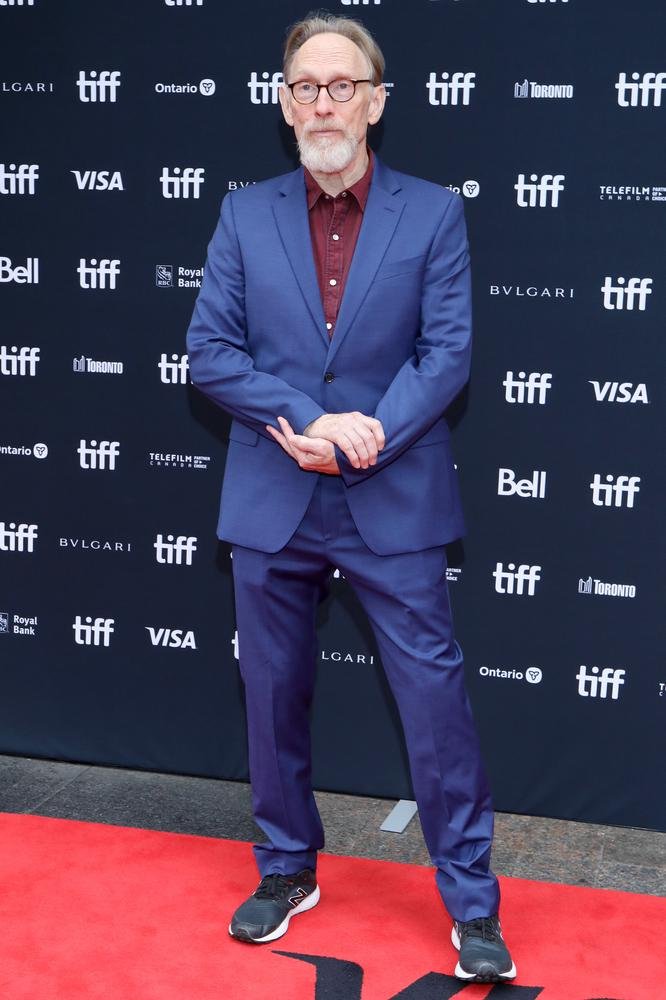
The world of Henry Selick is a realm of shadows and whimsy, intricate craft and unsettling beauty. While his completed works like The Nightmare Before Christmas and Coraline have solidified his place as a stop-motion maestro, a deeper dive into the Unrealized Projects and Future Visions of Henry Selick reveals an even richer tapestry of creative ambition, studio challenges, and an unwavering commitment to his unique artistic path. These unmade films and developing ideas aren't just footnotes; they're critical insights into the mind of a filmmaker who consistently pushes the boundaries of animation, even when the mainstream pushes back.
His story isn't just about what made it to the screen, but about the battles fought, the dreams deferred, and the persistent drive to bring "great, scary films for young 'uns" to life, often against significant odds.
At a Glance: Henry Selick's Unseen Cinematic Universe
- A Visionary's Struggle: Selick's career is marked by incredible artistic triumphs alongside a surprising number of high-profile projects that never saw the light of day, often due to creative differences or financial hurdles.
- The Pixar/Disney Interlude: A period of grand ambition, including Cinderbiter Productions, that ultimately resulted in the painful cancellation of The Shadow King after significant investment.
- Neil Gaiman's Influence: Gaiman's dark fantasy works have repeatedly drawn Selick's interest, leading to both critical successes (Coraline) and tantalizing unmade projects (The Graveyard Book, The Ocean at the End of the Lane).
- Stop-Motion's Enduring Allure: Selick passionately believes in the timeless magic of stop-motion, viewing its "old" nature as an asset that ensures longevity, despite its labor-intensive and costly production.
- Resilience and Reinvention: Even after setbacks, Selick consistently reacquires rights, seeks new partners (like Netflix for Wendell & Wild), and explores alternative formats (graphic novels) to keep his stories alive.
- Future Horizons: Upcoming projects hint at a broadening scope, including live-action adaptations and TV series, while his passion for intricate stop-motion narratives remains paramount.
The Genesis of a Stop-Motion Mastermind
To understand Selick's unrealized visions, it helps to briefly trace his realized ones and the influences that shaped them. Born in 1952, Selick's path to animation wasn't linear. It began with a childhood fascination sparked by Lotte Reiniger's The Adventures of Prince Achmed and the creature animations of Ray Harryhausen in The 7th Voyage of Sinbad. This early exposure to the unique magic of stop-motion — a painstaking process of manipulating models frame by frame — set the stage for a career dedicated to the craft.
After a detour through science, Selick gravitated to art and then animation at CalArts, honing his skills. He cut his teeth on commercials and early Disney projects like Pete's Dragon before his big break: directing 1993's The Nightmare Before Christmas, produced by Tim Burton. This film, alongside James and the Giant Peach (1996), showcased his distinctive blend of macabre whimsy and technical brilliance. These early successes, however, also hinted at the industry's complex relationship with stop-motion, as James and the Giant Peach's modest box office would soon lead to the cancellation of a promising follow-up. While his filmography is critically acclaimed, exploring his full breadth of work means appreciating his complete collection of Henry Selick movies.
The Early Casualties: When Disney Dreams Met Reality
Even early in his directorial career, Selick encountered the fickle nature of studio backing, especially for stop-motion, which is notoriously time-consuming and expensive.
Toots and the Upside Down House: The First Missed Opportunity
Following the release of James and the Giant Peach, Selick had a planned Disney stop-motion film titled Toots and the Upside Down House. The project, seemingly a natural progression, was unceremoniously canceled. The reason? James and the Giant Peach's "poor box office performance." This early setback highlighted a recurring theme in Selick's career: while critics often lauded his work, the commercial viability of his intricate, often darker, stop-motion features frequently presented an uphill battle for studios primarily focused on blockbusters. It was a stark reminder that artistic merit doesn't always guarantee a green light for the next project.
Monkeybone: A Detour into Disappointment
Selick's next feature, 2001's Monkeybone, was a live-action/stop-motion hybrid. It proved to be a critical and commercial failure, a rare misstep that deeply affected the director. So much so, in fact, that he reportedly vowed never to make another live-action film. This experience solidified his dedication to stop-motion, reaffirming where his true passion and expertise lay. It was a painful, but ultimately clarifying, lesson that helped steer his career back toward the medium where he truly excelled.
After Monkeybone, Selick contributed to Wes Anderson's The Life Aquatic with Steve Zissou, animating the fictional sea creatures, and was briefly attached to be the animation director for Fantastic Mr. Fox before departing to direct what would become his next major triumph.
The Laika Years and a Gaiman Collaboration
His move to Laika in 2006 to direct Coraline marked a significant turning point. Based on Neil Gaiman's novella, Coraline was a critical and commercial success, earning Selick Academy Award, BAFTA, and Golden Globe nominations. It also broke new ground as the first stereoscopic 3D stop-motion animated film. Coraline showcased everything Selick does best: beautiful, intricate animation, a dark yet child-friendly story, and a palpable sense of otherworldly wonder. However, Selick left Laika in 2009, setting the stage for his most ambitious — and ultimately, most heartbreaking — series of unrealized projects.
The Pixar/Disney Dream That Crumbled: The Shadow King and Beyond
In 2010, Selick signed an exclusive long-term contract with Pixar and The Walt Disney Company. This was huge news, promising a future filled with stop-motion wonders from the master himself, backed by the biggest names in animation. He founded Cinderbiter Productions, with a clear mission: "great, scary films for young 'uns."
The Shadow King (ShadeMaker): A Fifty-Million Dollar Heartbreak
The flagship project of Cinderbiter was ShadeMaker, later retitled The Shadow King. It was green-lit in 2011, and production began. This wasn't a concept that just died on the vine; a reported $50 million was spent. Sets were built, puppets were crafted, and animation was underway. Then, in 2012, Walt Disney Pictures abruptly canceled the film.
Selick publicly attributed the cancellation to "creative and scheduling issues," but more specifically, he pointed to interference from Pixar CCO John Lasseter. The narrative suggested a clash of visions, with Selick's distinct, darker aesthetic perhaps not aligning with Disney's perceived brand. For a filmmaker who champions the "old" magic of stop-motion and aims to bring "more experimental ideas into more traditional stories," this was a devastating blow. It underscores the immense challenge of maintaining artistic integrity within large studio systems, even for a director of Selick's caliber.
The good news? Selick has since reacquired the rights to The Shadow King. He has expressed interest in reviving it, perhaps first as a graphic novel, which could then pave the way for a film directed by someone else. This resilience and commitment to his vision, even when it means ceding directorial control, speaks volumes about his dedication to the story.
The Graveyard Book: Another Gaiman Adaptation Lost
The saga of Selick's collaboration with Disney continued with another tantalizing, yet ultimately unrealized, project: an adaptation of Neil Gaiman's beloved novel, The Graveyard Book. This seemed like a perfect fit, building on the success of Coraline and Selick's proven ability to translate Gaiman's unique blend of fantasy and darkness to the screen.
However, in early 2013, Selick once again parted ways with Disney, citing "scheduling conflicts." While details remain sparse, it’s not hard to imagine that the lingering tensions or philosophical differences that led to The Shadow King's demise might have played a role. It was a disheartening end to what many fans hoped would be another Selick-Gaiman masterpiece.
The Independent Spirit: Wendell & Wild and New Horizons
Despite the setbacks with Disney, Selick's vision remained undimmed. He found a new home and a new collaborative partner in Netflix for Wendell & Wild. Released in October 2022, this film, based on an original story by Selick, Jordan Peele, and Keegan-Michael Key, was a welcome return for the stop-motion maestro. It demonstrated his ability to adapt, secure funding, and maintain his distinct voice with a new creative team. This project serves as a powerful testament to his resilience and the enduring appeal of his unique storytelling.
Developing Projects: A Glimpse into the Future
Selick isn't one to rest on his laurels. His future visions continue to materialize, albeit slowly, across different formats:
- A Tale Dark and Grimm (Live-Action Film): Announced in 2013, Selick is slated to direct a live-action adaptation of Adam Gidwitz's novel. This marks a potential return to live-action filmmaking after his vow post-Monkeybone, suggesting a story he deeply believes in could override past disappointments.
- Little Nightmares (TV Adaptation): Announced in 2017, Selick is attached to a TV adaptation of the popular video game. This venture into television further expands his reach and allows for serialized storytelling, a new challenge for the director.
The Most Anticipated Unrealized Project: The Ocean at the End of the Lane
As of mid-2024, perhaps the most talked-about future vision for Selick is a stop-motion film adaptation of Neil Gaiman's 2013 novel, The Ocean at the End of the Lane. Selick himself envisions this as a "companion piece" to Coraline, a prospect that immediately excites fans of their previous collaboration. The potential to revisit Gaiman's universe with Selick's distinctive style is huge.
However, the path forward for this project is, predictably, not straightforward. By August 2024, its future was described as "in limbo." This phrase perfectly encapsulates the precarious journey of many of Selick's passion projects – always on the cusp, always facing hurdles, yet never quite extinguished from his creative mind. The uncertainty surrounding The Ocean at the End of the Lane serves as a poignant reminder of the challenges inherent in bringing intricate stop-motion narratives to the screen, even for a celebrated artist.
Why His Unrealized Projects Matter: Understanding Selick's Art and Advocacy
It's easy to focus solely on a director's completed filmography, but for Henry Selick, his unmade films are crucial for a more complete understanding of his artistry and his advocacy for stop-motion animation.
The True Cost of Vision
These canceled projects, particularly The Shadow King, reveal the immense financial and logistical hurdles of stop-motion. A reported $50 million spent before cancellation isn't just a number; it represents years of work, thousands of hours of painstaking animation, and countless creative decisions that were ultimately shelved. This isn't a medium for the faint of heart or the impatient. Selick's persistent pursuit of these projects, even after significant investment and loss, highlights his unwavering belief in their intrinsic value.
The Clash of Artistic Integrity and Corporate Imperatives
Selick's frequent clashes with studios, particularly Disney, illuminate the tension between a singular artistic vision and the broader corporate agenda of a major studio. His desire for "more experimental ideas into more traditional stories" often runs counter to a studio's preference for safer, more universally marketable narratives. His "great, scary films for young 'uns" might be too scary, too weird, or too niche for some executives. The story of The Shadow King is, in many ways, a microcosm of this ongoing struggle in Hollywood.
Stop-Motion: The Enduring Magic
Selick is a vocal champion of stop-motion. He views it not as an old-fashioned technique, but as "the first trick photography and the original movie magic." His argument is simple yet profound: stop-motion "can’t grow old, because it’s already old." In an age of increasingly seamless CGI, the tangible, handcrafted quality of stop-motion offers a unique charm and timelessness. He believes that while these films might have a "smaller market," they "last longer, and will have a much longer life." His continued pursuit of stop-motion projects, even those that remain unrealized, is a testament to this deep-seated conviction.
Common Questions About Selick's Unmade Works
Why does Henry Selick have so many canceled projects?
Several factors contribute. First, stop-motion animation is incredibly labor-intensive, time-consuming, and thus expensive. This makes studios hesitant, especially for projects perceived as niche. Second, Selick's unique, often darker, aesthetic can sometimes clash with the more mainstream sensibilities of large studios like Disney, leading to creative differences and eventual cancellations, as seen with The Shadow King. Finally, the fluctuating box office performance of his completed works can influence future green lights.
Will The Shadow King ever be made?
Henry Selick has reacquired the rights to The Shadow King and expressed a strong desire to revive the project. While a direct film production is uncertain, he's considered developing it as a graphic novel first, which could then potentially lead to a film, even if directed by someone else. So, there's still hope for the story to see the light of day in some form.
What is the current status of The Ocean at the End of the Lane adaptation?
As of mid-2024, the stop-motion adaptation of Neil Gaiman's The Ocean at the End of the Lane is described as being "in limbo." While Selick envisions it as a companion piece to Coraline and is actively developing it, its future production is uncertain, highlighting the ongoing challenges in securing backing for intricate stop-motion films.
The Road Ahead for a Stop-Motion Master
The Unrealized Projects and Future Visions of Henry Selick are more than just a list of "what ifs." They are integral chapters in the story of a singular artist who has dedicated his life to a unique craft. They reveal his unwavering commitment to dark whimsy, his resilience in the face of daunting challenges, and his profound belief in the lasting magic of stop-motion.
For fans, the existence of these "ghost films" only adds to Selick's mystique, reminding us that for every masterpiece that graces the screen, there's often a rich, unseen world of creative endeavor. While we celebrate his existing contributions, keeping an eye on his developing projects – from the hopeful resurrection of The Shadow King to the "in limbo" status of The Ocean at the End of the Lane – offers a continued glimpse into the mind of a filmmaker who still has so many dark, wondrous dreams left to share. Henry Selick’s legacy is defined not just by what he has created, but by the sheer force of imagination that drives everything he attempts, realized or not.