When you conjure images of The Nightmare Before Christmas, your mind likely goes straight to Tim Burton’s unique aesthetic. But beneath the iconic visuals and catchy songs lies a masterclass in stop-motion animation, a testament to Henry Selick's enduring legacy as the film’s director. This isn't just Burton's vision; it's Selick's meticulous craft that brought Halloween Town to life, cementing its place as a genre-defining classic.
More than a mere holiday mash-up, The Nightmare Before Christmas is a dazzling showcase of artistic dedication, pushing the boundaries of what stop-motion could achieve. It's a film that has captivated generations, largely due to the imaginative worlds and unforgettable characters brought forth by Selick's directorial genius.
At a Glance: Selick's Masterpiece
- Director, Not Just Producer: While conceived by Tim Burton, Henry Selick directed The Nightmare Before Christmas, bringing the stop-motion world to life.
- A Technical Marvel: The film involved 120+ crew, 20 sound stages, 227 puppets, and 109,440 frames of animation, demonstrating immense artisanal effort.
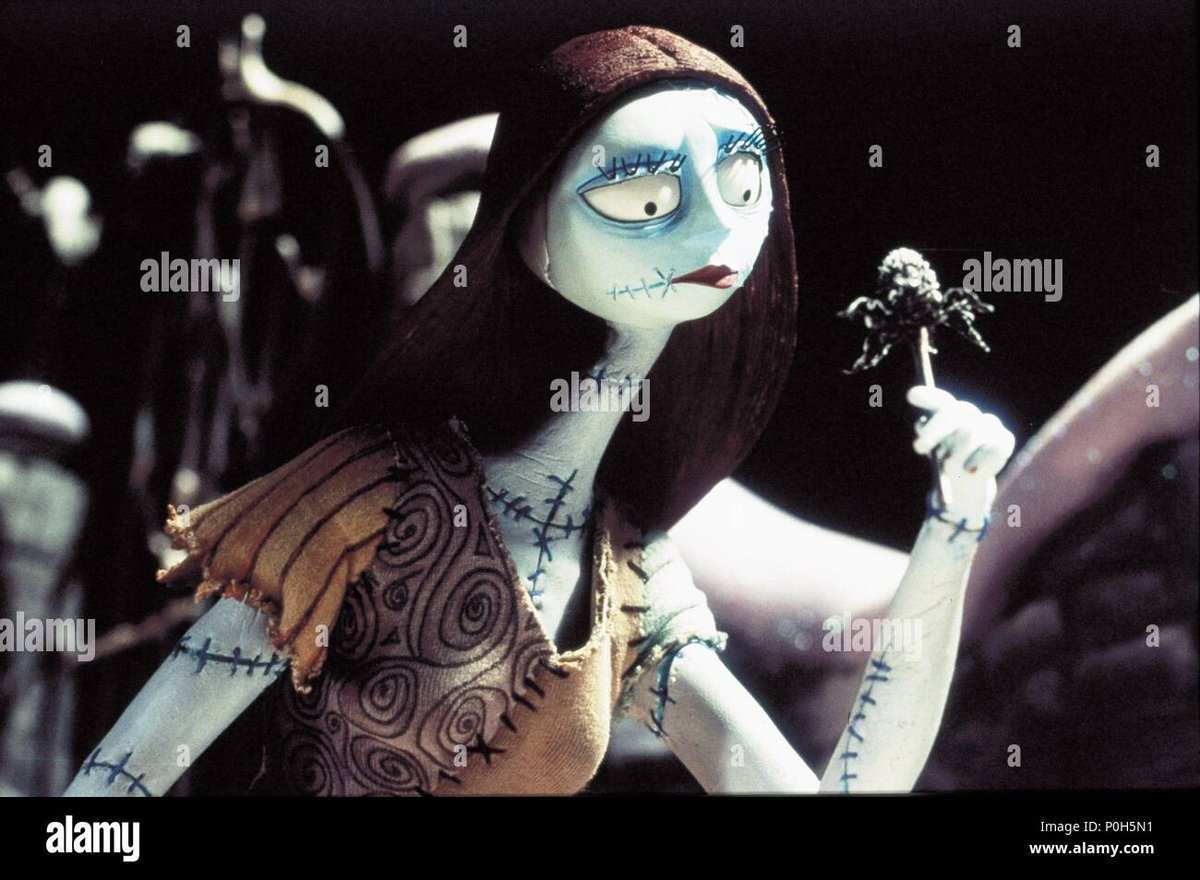
- Character Artistry: Jack Skellington alone had roughly 400 interchangeable heads for expressions, and Sally utilized a complex replacement animation method.
- Genre-Bending Story: It flawlessly blends Gothic fantasy with musical elements and an unlikely holiday crossover.
- Initial Hesitation, Lasting Impact: Disney initially released it under Touchstone Pictures due to its dark tone, but it became a critical and commercial success with a massive cult following, eventually earning preservation in the National Film Registry.
- Enduring Influence: Selick's distinct visual storytelling and meticulous animation style set a new bar for stop-motion, influencing countless animators and filmmakers.
The Genesis of a Ghastly Masterpiece: From Poem to Picture
The journey of The Nightmare Before Christmas began not on a film set, but in the creative mind of Tim Burton. As an animator at Walt Disney Productions in the early 1980s, Burton penned a three-page poem that captured the whimsical, macabre spirit of what would become Halloween Town. This early spark, fueled by his distinctive Gothic sensibilities, would eventually ignite a full-blown cinematic phenomenon.
However, bringing that poem to the screen was no small feat. After years in development limbo, Disney finally greenlit the project in 1990, with production kicking off in July 1991. The challenge was immense: how to translate Burton's unique aesthetic—a blend of German Expressionism, Dr. Seuss, and Edward Gorey—into a fluid, captivating stop-motion feature. This is where Henry Selick stepped in, a director whose name, while not always front-and-center, is inextricably linked to the film's spectacular success.
Henry Selick: The Unsung Alchemist of Stop-Motion
It's a common misconception that Tim Burton directed The Nightmare Before Christmas. While Burton was the visionary behind the concept and the main character designs, his commitments to other live-action projects (like Batman Returns) prevented him from taking the director's chair. Instead, he entrusted the monumental task to Henry Selick, a seasoned animator with a profound understanding of stop-motion's unique demands.
Selick, along with his dedicated crew, wasn't just executing a vision; he was interpreting, expanding, and animating it frame by painstaking frame. He credits Burton for the story and character foundation, but emphasizes his and his team's pivotal role in transforming sketches and concepts into a living, breathing cinematic experience. Selick's direction is evident in every movement, every subtle expression, every atmospheric detail that makes Halloween Town and Christmas Town feel so real. His gift lies in imbuing inanimate objects with soul, a skill he would hone further in subsequent acclaimed works. To truly appreciate the artistry of animated cinema, it's essential to explore Henry Selick's films and witness his consistent mastery of the craft.
Crafting the Worlds: Artistry in Motion
The visual appeal of The Nightmare Before Christmas is undeniable, a vibrant tapestry woven from dark fantasy and whimsical charm. This visual inventiveness is a direct result of Selick's direction and his team's incredible production design.
Halloween Town: A Gothic Dreamscape
Halloween Town is a character in itself, a swirling, twisted landscape influenced by German Expressionism. Think jagged angles, stark shadows, and a perpetually eerie twilight. Every building seems to sag and contort, reflecting the delightfully ghoulish inhabitants. The meticulous design extends to every prop and background element, creating an immersive world where pumpkins grin, trees have faces, and the very air hums with spooky delight. Selick ensured that even in its darkest corners, Halloween Town possessed a playful, almost inviting quality, perfectly setting the stage for Jack Skellington's existential musings.
Christmas Town: A Burst of Festive Fantasy
In stark contrast, Christmas Town is a vibrant explosion of color, round shapes, and sparkling snow. Inspired by Dr. Seuss, it's a place of pure, unadulterated holiday cheer, embodying everything Jack finds so fascinatingly alien. The transition between these two visually distinct worlds is a masterstroke, highlighting Jack's disorientation and obsession. Selick's team painstakingly constructed this bright counterpoint, making Jack's attempt to "improve" Christmas all the more comically disastrous.
Puppets and Performance: The Soul of Stop-Motion
The heart of The Nightmare Before Christmas beats through its puppets. The film's production was a massive undertaking, involving a crew of over 120 workers across 20 sound stages, capturing an astonishing 109,440 frames.
- The Many Faces of Jack: Jack Skellington, the charismatic Pumpkin King, was a marvel of puppet engineering. To convey his wide range of emotions—from weary boredom to manic enthusiasm to genuine remorse—filmmakers constructed approximately 400 interchangeable heads for his character alone. Each head represented a specific expression, allowing animators to subtly shift his demeanor frame by frame.
- Sally's Subtle Sentiments: Sally, the rag doll with a heart of gold, presented a different animation challenge. Her mouth movements were animated using a replacement method, where ten distinct face types, each with eleven different expressions, were swapped out. This allowed for incredibly nuanced performance, capturing her quiet foresight and deep affection for Jack.
- Beyond the Leads: In total, 227 puppets were built for the film, each a miniature work of art requiring intricate articulation and careful handling. The painstaking process of moving these puppets, often just a fraction of an inch at a time, and then capturing it with a camera, is what defines stop-motion animation. It's a testament to the animators' patience and Selick's leadership that these characters feel so alive and expressive. The influence of animation pioneers like Ray Harryhausen is palpable in the fluid, believable movements of the characters, showcasing Selick's deep respect for the craft's history.
Voices That Haunt and Harmonize
A film is only as good as its characters, and The Nightmare Before Christmas boasts an ensemble of truly unforgettable personalities, brought to life by a stellar voice cast and a legendary composer.
Danny Elfman, a longtime collaborator with Tim Burton, not only wrote the film's iconic songs and score but also provided the magnificent singing voice for Jack Skellington. His compositions perfectly capture the film's blend of macabre humor and heartfelt emotion, from the soaring "This Is Halloween" to the poignant "Sally's Song."
The principal voice cast further solidified the characters' identities:
- Chris Sarandon lent his distinguished speaking voice to Jack Skellington, imbuing him with an aristocratic charm.
- Catherine O'Hara delivered a gentle yet resilient performance as Sally, also voicing the mischievous Shock.
- William Hickey brought a delightfully unsettling quality to the mad scientist Doctor Finkelstein.
- Ken Page gave a truly unforgettable, booming performance as the villainous Oogie Boogie.
- Paul Reubens was the perfectly impish Lock, and Danny Elfman himself voiced Barrel, completing the mischievous trio.
- Glenn Shadix was wonderfully frantic as The Mayor of Halloween Town, and Ed Ivory provided the comforting tones of Santa Claus and the Narrator.
- Even minor characters like Igor (voiced by Joe Ranft) left a lasting impression, showcasing the depth of talent involved.
This carefully chosen cast, under Selick's guidance, ensured that each character resonated, whether through song or dialogue, making their animated performances all the more compelling.
Story & Themes: A Holiday Mash-Up with a Message
At its core, The Nightmare Before Christmas is a story of identity, purpose, and the allure of the unknown.
Jack's Existential Crisis and Grand Ambition
Jack Skellington, the Pumpkin King, is a master of Halloween, revered by his town. Yet, beneath the adulation, he feels a profound weariness, a sense of creative stagnation. His discovery of Christmas Town isn't just curiosity; it's an awakening. He becomes obsessed with the holiday's vibrant joy and attempts to take it over, believing he can "improve" it with a Halloween twist. This journey highlights a universal theme: the search for new meaning when routine becomes stifling. Jack's well-intentioned but disastrous efforts to redefine Christmas are both comedic and a cautionary tale about cultural appropriation and misunderstanding.
Sally's Foresight and Quiet Strength
In contrast to Jack's grand, often reckless ambitions, Sally represents quiet wisdom and intuition. A creation of the eccentric Doctor Finkelstein, she yearns for freedom and foresees the disaster inherent in Jack's Christmas plans. Her warnings, however, are dismissed by an overzealous Jack. Sally's journey is one of gentle rebellion, demonstrating strength not through force, but through intelligence, empathy, and an unwavering commitment to what is right. Her loyalty to Jack, despite his flaws, and her eventual role in saving Christmas and rescuing Santa, solidify her as one of the film's most beloved and capable characters.
The Clash of Cultures and Finding Your Place
The film expertly contrasts the dark, spooky charm of Halloween with the bright, joyous spirit of Christmas. This cultural clash is central to the narrative, leading to delightful mayhem but also a deeper understanding of what makes each holiday special. Ultimately, Jack learns that true fulfillment comes not from mimicking or taking over another's tradition, but from embracing and celebrating his own unique strengths. The story beautifully concludes with Jack's renewed love for Halloween, underscoring the importance of authenticity and finding joy in one's true self. The ending, with Jack and Sally finally declaring their love, provides a satisfying emotional resolution to the fantastical adventure.
Navigating Disney's Reservations: From Touchstone to Triumph
Despite its profound artistry, The Nightmare Before Christmas faced an initial hurdle: Disney's apprehension. The studio, known for its family-friendly fare, was concerned that the film's Gothic tone and slightly scary elements might be "too dark and scary for kids." This led to Disney releasing the film under its Touchstone Pictures label, a division typically reserved for more adult-oriented content.
This initial marketing decision, while understandable from a corporate perspective, perhaps underestimated the sophistication of younger audiences and the timeless appeal of a well-crafted dark fantasy. The film was explicitly marketed as "Tim Burton's The Nightmare Before Christmas," an understandable move given Burton's rising star power, but one that further obscured Selick's crucial directorial role in the public consciousness.
From Cult Hit to Cultural Icon: An Enduring Legacy
Despite the initial cautious release strategy, The Nightmare Before Christmas quickly found its audience and blossomed into a monumental success, both critically and commercially.
Critical Acclaim and Awards
Upon its premiere on October 9, 1993, and wide release on October 29, 1993, the film garnered widespread critical praise. Critics lauded its "visual inventiveness," "timelessness," and "unique blend of fun and fright." It received an Academy Award nomination for Best Visual Effects, a testament to the groundbreaking stop-motion animation Selick and his team achieved. The film also won a Saturn Award for Best Fantasy Film, further solidifying its place in cinematic history.
Box Office Journey and Re-releases
The film initially grossed a respectable $50 million domestically. However, its enduring popularity led to multiple reissues, including visually stunning 3-D conversions that began in 2006. These re-releases dramatically boosted its box office, accumulating a total gross of $108.5 million, a remarkable feat for a stop-motion film released decades prior. This consistent commercial success speaks volumes about its staying power and broad appeal across generations.
A Deep-Rooted Cult Following
Beyond the numbers, The Nightmare Before Christmas developed a significant and passionate cult following. Its unique aesthetic, memorable characters, and unforgettable songs made it a staple for fans of all ages. It transcended its holiday themes, becoming a year-round cultural phenomenon, influencing fashion, art, and even theme park attractions. The film's merchandise is ubiquitous, a testament to its pervasive influence.
National Recognition: Preservation in the Film Registry
In a crowning achievement for any film, The Nightmare Before Christmas was selected for preservation in the United States National Film Registry by the Library of Congress in 2023. This honor, bestowed upon films deemed "culturally, historically, or aesthetically significant," unequivocally cements its status as a masterpiece of American cinema. It's a recognition of the film's artistic merit, its enduring impact, and, implicitly, Henry Selick's crucial role in its creation.
Why It Still Resonates: A Timeless Allure
Three decades after its release, The Nightmare Before Christmas continues to captivate new audiences and delight existing fans. Its enduring appeal can be attributed to several key factors:
- Universal Themes: The film explores timeless themes of identity, the search for purpose, the excitement of discovery, and the importance of self-acceptance. These narratives resonate regardless of age or background.
- Visual Spectacle: The stop-motion animation remains breathtaking. In an era of ever-advancing CGI, the handcrafted quality of Selick's film gives it a unique warmth and texture that never feels dated. It's a tangible, tactile world that draws you in.
- Musical Genius: Danny Elfman's score and songs are inseparable from the film's identity, providing emotional depth, narrative drive, and unforgettable earworms.
- Characters with Heart: From the existential Jack to the quietly courageous Sally, the mischievous Lock, Shock, and Barrel, and the boisterous Oogie Boogie, the characters are wonderfully designed and compellingly performed, making them instantly iconic.
- A Perfect Blend of Dark and Light: The film masterfully balances its gothic elements with humor, warmth, and a festive spirit. It's spooky without being terrifying, and heartwarming without being saccharine.
Beyond Halloween Town: Selick's Continued Excellence
While The Nightmare Before Christmas is undoubtedly Henry Selick's most widely recognized directorial work, it's far from his only contribution to the world of stop-motion. His subsequent films further underscore his unparalleled skill and unique vision.
Following Nightmare, Selick went on to direct James and the Giant Peach (1996), a charming adaptation of Roald Dahl's classic, which blended live-action with stop-motion seamlessly. He truly solidified his reputation as a master storyteller in his own right with Coraline (2009), another visually stunning and critically acclaimed stop-motion feature that pushed the boundaries of the medium even further, earning an Academy Award nomination for Best Animated Feature. His recent work on Wendell & Wild (2022) continues to showcase his distinct blend of dark fantasy, quirky humor, and meticulous animation.
Selick's filmography reveals a consistent commitment to the intricate art of stop-motion, consistently delivering narratives that are both visually inventive and deeply resonant. His legacy isn't just tied to one film, but to a lifelong dedication to a craft that brings dreams and nightmares alike vividly to life.
The Lasting Footprint of a Director's Vision
The Nightmare Before Christmas is more than just a beloved holiday film; it’s a landmark achievement in animation. It demonstrates how a singular artistic vision, meticulously brought to life through dedicated craftsmanship, can transcend its genre and era. Henry Selick’s role as director was absolutely pivotal in this process, guiding hundreds of artists to create a world that feels both fantastical and incredibly real. His ability to imbue puppets with genuine emotion, to construct visually distinct and immersive environments, and to tell a compelling story through the laborious art of stop-motion animation is nothing short of extraordinary.
Next time you visit Halloween Town or hear Jack Skellington’s lament, remember the director who breathed life into these iconic figures. Henry Selick's name may not always be in the main title, but his enduring legacy is undeniably etched into every frame of this unforgettable cinematic experience.