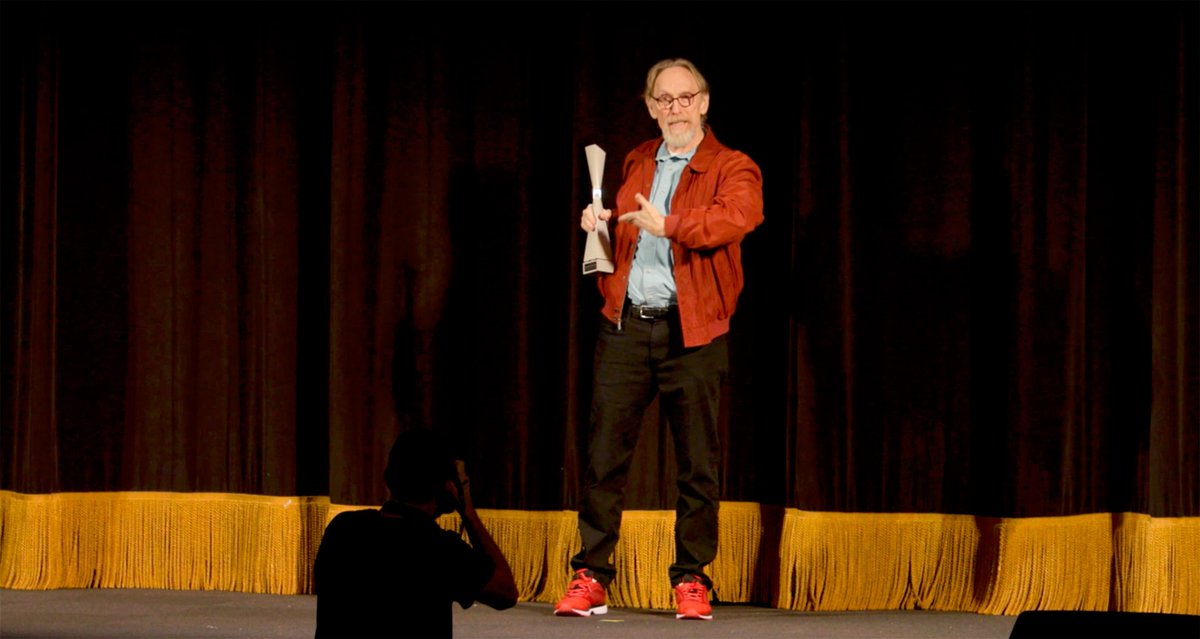
Step into the shadowy, dreamlike worlds of Henry Selick, and you immediately recognize a master at work. His unique blend of the macabre and the beautiful, brought to life through the painstaking artistry of stop-motion animation, has carved a distinctive niche in cinematic history. This comprehensive guide provides a deep dive into the Henry Selick Filmography & Career Overview, tracing the journey of a visionary director who has consistently pushed the boundaries of what animated films can achieve, leaving an indelible mark on audiences and the animation industry alike.
At a Glance: Henry Selick's Enduring Impact
Before we delve into the intricate details, here’s a quick snapshot of what makes Henry Selick a legend:
- Stop-Motion Maestro: Widely recognized as a preeminent director in stop-motion animation, a technique he has championed and evolved.
- Darkly Whimsical Aesthetic: Known for crafting films that blend gothic themes, intricate character designs, and often unsettling yet enchanting narratives, appealing to both children and adults.
- Pioneer of Innovation: Directed Coraline, the first stereoscopic 3D stop-motion animated film, setting new industry standards.
- Key Collaborator: Frequent partnerships with renowned artists like Tim Burton (as producer), Neil Gaiman, Jordan Peele, and the late Joe Ranft.
- Resilience & Persistence: Despite production challenges and canceled projects, Selick consistently returns to deliver unique animated features.
- Award-Nominated Work: Films like Coraline have earned Oscar, BAFTA, and Golden Globe nominations, showcasing critical acclaim.
The Genesis of a Visionary: Early Influences and Artistic Roots
Born Henry Selick Jr. in Glen Ridge, New Jersey, in 1952, Selick's artistic journey began remarkably early, drawing by the tender age of three. His childhood in Rumson was steeped in creative inspiration, particularly from the early titans of animation and fantasy cinema. He was captivated by the exquisite silhouette animation of Lotte Reiniger’s 1926 film The Adventure of Prince Achmed, which demonstrated the expressive power of non-traditional animation. Equally impactful were the groundbreaking animated creatures brought to life by Ray Harryhausen in classics like The 7th Voyage of Sinbad, sparking a lifelong fascination with stop-motion and creature design.
After graduating from Rumson-Fair Haven High School in 1970, Selick briefly pursued science at Rutgers University, a path he quickly abandoned for his true calling: art. He transferred to Syracuse University before finding his true home at the prestigious California Institute of the Arts (CalArts). Here, he became one of the pioneering students in the Disney character animation program, but crucially, he also immersed himself in experimental animation techniques under the tutelage of Jules Engel. This dual education — traditional Disney craftsmanship combined with avant-garde exploration — would shape his distinctive style. During his time at CalArts, Selick produced two award-winning student films, Phases and Tube Tales, laying the groundwork for his future innovations.
Disney Apprenticeship and Independent Explorations
Upon graduating from CalArts in 1977, Selick joined Walt Disney Studios, where he honed his skills as an in-betweener and animator trainee. He contributed to films such as Pete's Dragon and The Small One, eventually advancing to a full animator role on The Fox and the Hound. His talent for designing memorable creatures also shone through in his work on the alien creature for The Watcher in the Woods.
While gaining valuable studio experience, Selick's independent spirit remained vibrant. In 1979, he took a significant step, independently creating Seepage, a nine-minute short film that seamlessly blended stop-motion and cel animation. This ambitious project garnered numerous awards, affirming his unique voice and command of mixed-media animation techniques. These early works, including Phases, Seepage, and Tube Tales, were recognized for their historical and artistic significance, being preserved by the Academy Film Archive in 2012.
Founding Selick Projects and Breaking into the Mainstream
By 1986, Henry Selick was ready to chart his own course, founding Selick Projects (later renamed Twitching Images). This company became a creative hub, producing innovative station IDs for MTV, which allowed him to experiment with diverse visual styles and reach a broad audience. Selick Projects also crafted memorable commercials for major brands, including iconic work for Pillsbury (bringing the Pillsbury Doughboy to life) and Ritz Bits, demonstrating his ability to infuse even commercial projects with his distinctive animation flair.
His 1990 film project, Slow Bob in the Lower Dimension, was a pivotal moment. This short film showcased a daring combination of live-action, stop-motion, and cut-out animation, effectively serving as a proof-of-concept for his ambitious visual storytelling. Its success directly led to the opportunity that would catapult him to international recognition: directing his first full-length stop-motion feature.
Iconic Beginnings: The Nightmare Before Christmas and James and the Giant Peach
In 1993, Henry Selick directed The Nightmare Before Christmas, a film that would become a beloved cult classic and a Halloween-Christmas staple. Though often attributed solely to Tim Burton (who served as producer and conceptualized the story), it was Selick's meticulous direction and the painstaking efforts of his animation team that brought the intricate world of Jack Skellington to life. The film’s gothic charm, memorable characters, and catchy songs were a testament to Selick's ability to translate a dark, whimsical vision into a compelling cinematic experience. It established his reputation for crafting visually rich, emotionally resonant stop-motion narratives.
Following this success, Selick reunited with Tim Burton for another ambitious stop-motion project: James and the Giant Peach (1996). Based on Roald Dahl's classic children's book, this film further showcased Selick’s skill in combining live-action sequences with elaborate stop-motion animation, particularly in bringing the fantastical insect characters to life within the giant peach. Both films cemented Selick's status as a director capable of navigating complex production challenges while maintaining a distinct artistic sensibility. If you're looking for a comprehensive rundown of his directorial work, exploring each project's unique contributions, you can find a dedicated page on Henry Selick movies.
A Detour into Live-Action: The Lessons of Monkeybone
In 2001, Selick ventured away from his primary medium to direct Monkeybone, a live-action film with stop-motion elements, an adaptation of the comic book Dark Town. This project proved to be a significant departure, and ultimately, a commercial and critical failure. The film struggled to find its audience, and its reception led Selick to a crucial realization about his creative path. He publicly vowed against directing future live-action films, reaffirming his commitment to the artistry and control offered by stop-motion animation. It was a challenging experience, but one that undeniably refocused his extraordinary talent.
A Stop-Motion Renaissance: Coraline and the Laika Years
Despite the setback of Monkeybone, Selick's expertise in stop-motion remained highly sought after. He contributed his animation talents to Wes Anderson's distinctive film, The Life Aquatic with Steve Zissou, animating the various sea creatures that populate its whimsical world. He was even initially an animation director for Anderson’s Fantastic Mr. Fox but left that project in 2006 for a more significant opportunity.
That opportunity was Coraline (2009), a project for the burgeoning animation studio Laika, LLC. Based on Neil Gaiman's acclaimed novella, Coraline marked a new pinnacle in Selick's career and in stop-motion animation itself. It was the first stereoscopic 3D stop-motion animated film, pushing technical boundaries and offering audiences an immersive experience unlike any other. The film’s haunting beauty, intricate design, and compelling narrative earned widespread critical acclaim, receiving an Academy Award nomination for Best Animated Feature, alongside BAFTA and Golden Globe nominations. Coraline was a resounding success, solidifying Selick's reputation as a master storyteller and innovator in the stop-motion realm. However, Selick would depart Laika in 2009.
The Pixar Chapter and Unfulfilled Visions
In 2010, buoyed by the success of Coraline, Henry Selick signed a long-term contract with Pixar and The Walt Disney Company. This partnership was intended to exclusively produce stop-motion films, allowing Selick to form his own production entity, Cinderbiter Productions, with the stated aim of making "great, scary films for young 'uns." It seemed like the perfect synergy: Selick’s unique vision backed by Disney's vast resources.
Under this deal, Selick began developing ShadeMaker, later retitled The Shadow King. The project was deep into production, with an estimated $50 million investment, when Walt Disney Pictures abruptly canceled it in 2012. The official reasons cited were creative and scheduling issues, though Selick publicly attributed the cancellation to interference from then-CCO of Pixar, John Lasseter, implying a clash between his distinct, darker aesthetic and Disney/Pixar's more mainstream sensibilities. This was a significant blow, leaving an ambitious project unfinished and costing the studio a considerable sum.
However, Selick’s persistence is a hallmark of his career. In 2022, a decade after its cancellation, he reacquired the rights to The Shadow King, holding out hope that the project might one day be revived, potentially even as a graphic novel. This demonstrates his deep commitment to his creative ideas, regardless of the hurdles.
A Return to Form: Wendell & Wild and the Future
After the disappointment of The Shadow King, Selick continued to develop new projects. In 2022, he made a triumphant return with Wendell & Wild, a stop-motion feature developed in collaboration with comedians Jordan Peele and Keegan-Michael Key. The film, a darkly comedic tale of two demon brothers, found a home with Netflix and was released on October 28, 2022. This collaboration brought Selick's signature style to a new generation of viewers through the streaming platform, proving his enduring relevance and ability to adapt to changing industry landscapes.
Selick's future filmography continues to look promising, with several projects in various stages of development:
- A Tale Dark and Grimm: A live-action adaptation of Adam Gidwitz's fantasy novel, announced in 2013, indicating Selick's continued interest in dark fairy tales, even if primarily in a producer role for live-action.
- Little Nightmares: A TV adaptation of the popular video game, with a pilot announced in June 2017. This project holds the potential to translate the game's eerie atmosphere into an animated series.
- The Ocean at the End of the Lane: As of June 2024, Selick was developing a stop-motion film adaptation of another Neil Gaiman work, The Ocean at the End of the Lane. While its future was uncertain by August 2024, it highlights his ongoing desire to adapt complex, fantastical literature into his preferred animation medium.
Henry Selick's Enduring Vision: Key Themes and Artistic Signatures
Across his diverse body of work, several common threads and artistic signatures define Henry Selick's unique contribution to animation:
The Allure of the Macabre and the Beautiful
Selick's films consistently navigate the thin line between beauty and grotesqueness, comfort and fear. His worlds are often filled with quirky, elongated, or slightly deformed characters who, despite their unsettling appearances, possess deep emotional cores. He understands that genuine wonder can often be found in the shadows, and that a touch of the macabre can make the beautiful truly shine. This approach allows his films to resonate with audiences who appreciate narratives that don't shy away from darker themes but ultimately offer hope or profound lessons.
Mastery of Stop-Motion Animation
At the heart of Selick's legacy is his unwavering commitment to stop-motion. He views the technique not as a limitation, but as a unique expressive tool. The tangible, handcrafted quality of stop-motion imbues his films with an unparalleled texture and warmth, a stark contrast to the often slick perfection of CGI. His meticulous attention to detail, from character movements to environmental design, makes his animated worlds feel lived-in and authentic, even in their fantastical nature. Each frame is a testament to thousands of tiny, precise adjustments, a true labor of love that audiences instinctively appreciate.
Collaborative Spirit
While a distinct auteur, Selick is also a keen collaborator. His work with Tim Burton on Nightmare and James, his adaptation of Neil Gaiman’s works (Coraline, Ocean at the End of the Lane), and his recent partnership with Jordan Peele and Keegan-Michael Key on Wendell & Wild showcase his ability to integrate other powerful creative voices into his own artistic vision. These collaborations often result in a richer, more layered storytelling experience that expands the emotional and thematic depth of his films. He also formed significant professional bonds, such as his collaboration with the late voice actor and artist Joe Ranft, who contributed to the distinctive voices and characterizations in his early films.
Exploring Childhood Fears and Identity
Many of Selick's films delve into the psychological landscapes of childhood, exploring themes of belonging, identity, and confronting fears. Whether it's Jack Skellington's identity crisis, James's quest for family, or Coraline's struggle with her neglectful parents and her courage against the Other Mother, his characters often embark on journeys of self-discovery in fantastical, perilous settings. These narratives resonate deeply with audiences, tapping into universal anxieties and triumphs.
Beyond the Screen: An Animator's Persistence
Henry Selick's journey through the world of animation is a powerful testament to artistic persistence. From his early days at CalArts and Disney to founding his own company, navigating the challenges of major studio deals, and now finding new avenues with streaming platforms, his career is marked by an unwavering dedication to his craft. He has consistently chosen the path of painstaking artistry, proving that stop-motion animation, far from being a relic of the past, remains a vibrant and evolving medium with endless storytelling potential.
For anyone captivated by the magic of animation, especially the tangible charm of stop-motion, exploring the Henry Selick filmography is not just watching movies; it's stepping into a uniquely crafted universe. His work invites you to embrace the strange, marvel at the intricate, and appreciate the profound beauty that can be found in the shadowy corners of imagination. What's next for this stop-motion sorcerer? Only time will tell, but one thing is certain: it will be a visual feast unlike any other.