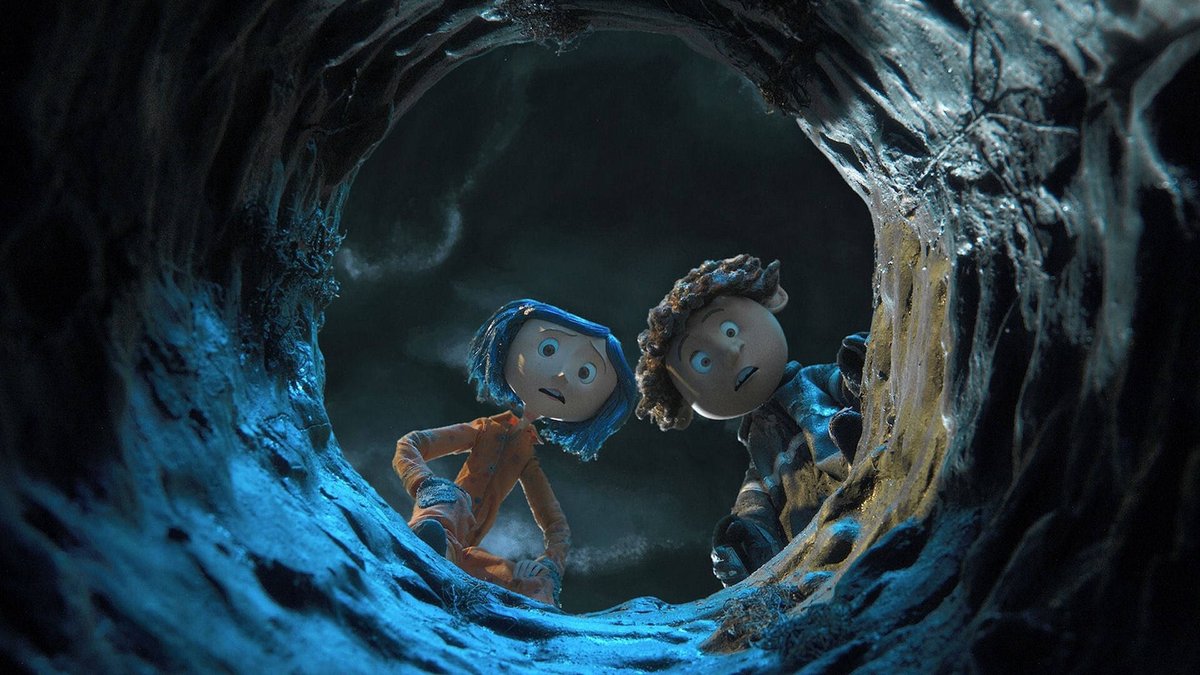
In the vast, ever-evolving landscape of animation, few films have etched themselves into the public consciousness with the singular, unsettling beauty of Coraline. This isn't just a movie; it's a meticulously crafted nightmare, a visually arresting fable that continues to captivate audiences 15 years after its debut. Our journey today is a deep dive into Coraline's stop-motion mastery, exploring how Henry Selick's visionary direction and LAIKA's unparalleled craftsmanship not only pushed the boundaries of the medium but also forged an enduring argument for animation's limitless possibilities.
At a Glance: Unpacking Coraline's Animated Genius
- A Stop-Motion Marvel: Coraline set new benchmarks for the stop-motion animation medium, proving its power to tell complex, dark, and deeply emotional stories.
- Visionary Direction: Henry Selick, known for his distinctive style, masterfully translated Neil Gaiman's novella into a visually stunning and narratively daring film.
- Unprecedented Detail: The film's meticulous production involved years of work, thousands of hand-crafted elements, and groundbreaking 3D technology, making every frame a work of art.
- Themes for All Ages: Despite its dark undertones, Coraline delivers timeless lessons about courage, self-reliance, valuing family, and trusting your instincts.
- AI's Evolving Role: The film's intricate artistry now serves as a benchmark for how emerging AI tools are augmenting animation, promising to democratize advanced techniques while raising ethical questions.
- Enduring Legacy: Coraline remains a testament to the power of traditional artistry blended with innovative technology, ensuring its place as a classic for generations to come.
The Enduring Magic of Coraline: A Story Beyond the Seams
When Coraline premiered in 2009, it arrived not just as another animated feature, but as a bold statement. Adapted from Neil Gaiman's chilling novella, director Henry Selick crafted a dark children's horror film that dared to challenge the saccharine norms often associated with the genre. It embraced risk, both in its storytelling tone and its ambitious filmmaking style, creating a narrative that felt both deeply unsettling and profoundly resonant.
At its heart lies Coraline Jones (voiced with perfect adolescent weariness by Dakota Fanning), an 11-year-old girl bristling with curiosity and frustration. She's just moved with her busy, often-preoccupied writer parents (Teri Hatcher and John Hodgman) to a creaky old house in the perpetually rainy Pacific Northwest. There, amidst the peeling wallpaper and eccentric neighbors, Coraline stumbles upon a hidden door. This portal leads her to the "Other World"—a seemingly brighter, more perfect reflection of her own life, complete with an "Other Mother" and "Other Father" who are attentive, doting, and eager to spoil her. The catch? They have buttons for eyes, and beneath the veneer of perfection lurks a corrupting darkness.
This vivid contrast, this tantalizing illusion of a better life, is where Coraline truly shines. It's a coming-of-age story wrapped in a gothic fairytale, exploring universal themes: the allure of escapism, the importance of seeing beyond superficial appearances, the true value of family, and the strength found in being authentically oneself. Fifteen years on, the film's return to cinemas isn't just a nostalgic nod; it’s a reaffirmation of its timeless lessons and its compelling argument for animation's boundless narrative potential. It stands as a stark counterpoint to the industry's increasing reliance on photorealistic remakes and endless sequels, reminding us what true originality and artistic bravery can achieve.
Beyond Pixels: Why Stop-Motion Was the Only Way
To understand the profound impact of Coraline, you must first grasp why stop-motion animation was not merely a choice, but an imperative. In an era increasingly dominated by CGI, Selick and the pioneering studio LAIKA insisted on the painstaking, tactile artistry of stop-motion. This wasn't a nostalgic indulgence; it was a deliberate artistic decision to ground the fantastical in something tangible and undeniably real.
The meticulous craftsmanship involved is staggering. Each second of Coraline contains 24 frames, meaning every single puppet movement had to be adjusted and photographed 24 times for just one second of screen time. These aren't just characters on screen; they are handmade dolls, imbued with life through thousands of individual, minute adjustments. The sheer scale of the production is mind-boggling: two years of pre-production laying the groundwork, followed by an arduous 83 weeks of shooting. Every prop, every hair, every flicker of light was deliberately positioned and captured, imbuing the final film with an undeniable sense of presence and depth that CGI often struggles to replicate.
The film's environments, from the dreary, rain-soaked Oregon setting to the dazzling yet eerie perfection of the "Other World," are rich with an extraordinary level of detail. The textures, the subtle imperfections, the way light plays on fabric—all contribute to an immersive experience that feels handmade and lived-in. This dedication to craft builds on the history of stop-motion animation, taking its foundational principles and elevating them through modern techniques. LAIKA, in particular, has become synonymous with pushing these boundaries, showcasing LAIKA's studio innovations with every subsequent film.
Crucially, Coraline was also the first stop-motion feature film to be shot entirely in 3-D. This wasn't a gimmick; it was an integral part of Selick's vision, enhancing the depth and immersion of Coraline's journey into the "Other World." The carefully composed layers of the stop-motion sets lent themselves perfectly to the stereoscopic format, making the magical seem more tangible, and the horrors more visceral. This innovative use of technology amplified the handcrafted artistry, rather than overshadowing it.
Directing the Unseen: Henry Selick's Visionary Hand
Henry Selick is a name synonymous with animation that dares to be different. His filmography is a testament to his unique ability to blend the fantastical with the frightening, the whimsical with the melancholic. Bringing Coraline to life was a monumental task, requiring not just technical prowess but a profound understanding of storytelling and a willingness to embrace the darker aspects of childhood fears.
Selick's directorial techniques are distinct. He possesses a keen understanding of stop-motion's inherent ability to evoke a dreamlike, almost surreal quality that live-action struggles to achieve. He doesn't shy away from the unsettling, instead using it as a tool to explore complex emotions and themes. In Coraline, this means embracing the inherent creepiness of dolls with button eyes, or the charming-yet-insidious nature of the Other Mother. He orchestrates every frame to convey mood, subtext, and character, making the artificial feel deeply authentic. If you look at Henry Selick's directorial techniques, you'll see a consistent thread of meticulous planning combined with an intuitive sense for the grotesque beauty that stop-motion excels at.
His vision is about more than just making pretty pictures; it’s about leveraging the unique qualities of the medium to amplify emotional depth. The slight hesitations in a puppet's movement, the handmade textures of a miniature set, the tangible quality of light—all are carefully utilized to draw the audience deeper into Coraline's world, making her fears and triumphs feel intensely real. This commitment to artistic integrity and narrative boldness defines not only Coraline but also All Henry Selick movies throughout his distinguished career. He understands that animation isn't just for children, but a powerful vehicle for exploring the full spectrum of human experience.
Deconstructing the "Other World": Crafting Visual Wonder and Horror
The true genius of Coraline lies in its visual storytelling, particularly in the stark contrast between Coraline's drab real world and the vibrant, yet sinister, "Other World." Every design choice, from character appearance to set dressing, is a deliberate act of narrative reinforcement, lulling the audience into a false sense of security before revealing the underlying dread.
The character designs are exemplary. Coraline herself is a bundle of expressive energy, her gangly limbs and distinctive blue hair making her instantly recognizable. Her "Other Parents" are initially caricatures of parental perfection—taller, more glamorous, with perpetually smiling faces that are only truly unsettling once you notice the shiny, unblinking buttons where their eyes should be. This seemingly innocuous detail transforms them from charming figures into objects of profound disquiet, a masterclass in unsettling design. The supporting characters, both real and "Other," are equally unique, from the eccentric Miss Spink and Miss Forcible to the acrobatic Mr. Bobinsky and his mouse circus. Each character's "Other World" counterpart offers a subtly sinister reflection, their charm subtly twisted to fit the Other Mother's deceptive narrative.
Set design and props play an enormous role in this visual duality. Coraline's real home, the Pink Palace, is rendered with a faded grandeur, its rooms filled with dusty antiques and a palpable sense of neglect. The "Other World," in contrast, bursts with saturated colors, whimsical architecture, and food that practically glows. Yet, upon closer inspection, elements like the candy tree or the elaborate garden begin to feel too perfect, too orchestrated, hinting at the manipulative force behind them. The level of detail in every miniature prop, from Coraline's rain boots to the Other Mother's cooking implements, grounds the fantastical in a believable, tactile reality.
The lighting and color palette choices are paramount in establishing mood. The real world is often bathed in muted grays, blues, and browns, emphasizing its melancholic, mundane nature. The "Other World" explodes with vibrant magentas, electric blues, and golden yellows, designed to be irresistibly alluring. However, as the Other Mother's true intentions are revealed, these bright colors begin to shift, becoming sickly, garish, and ultimately suffocating. The entire visual language of the film contributes to its immersive power, drawing the viewer into Coraline's experience of wonder, then horror.
Pushing the Envelope: Coraline's Technical Achievements
Coraline's visual brilliance is underpinned by an array of technical innovations that set new standards for stop-motion animation. The creative team at LAIKA pushed existing boundaries, developing new methodologies to achieve Selick's ambitious vision.
One of the most significant challenges was puppet fabrication and articulation. The puppets weren't just static figures; they were intricate mechanisms designed for an astonishing range of movement and expression. Coraline alone had multiple versions, each subtly different to facilitate specific actions or costume changes. The armatures—the internal skeletons—were engineered with precision, allowing animators to make minute adjustments to fingers, shoulders, and even individual strands of hair.
Facial animation was another groundbreaking area. Instead of merely swapping out full heads, LAIKA pioneered a process using 3D printers to create hundreds of thousands of interchangeable faces. For Coraline, there were over 207,000 possible facial expressions, allowing for an unprecedented level of nuance and emotion. This fusion of traditional sculpting with cutting-edge additive manufacturing gave the characters a remarkably fluid and lifelike range of expressions, defying the often-stiff limitations of earlier stop-motion puppets.
Animating challenging elements like water and organic movement in stop-motion is notoriously difficult. Instead of relying heavily on CGI composites, Coraline embraced practical solutions wherever possible. The torrential rain in the real world was often achieved using glycerin or tiny glass beads, painstakingly animated frame by frame. The "Other World" garden, with its blossoming flowers and flying insects, utilized intricate wire work and subtle animation techniques to convey movement that felt both magical and tangible.
And, as mentioned, Coraline was a pioneer in stereoscopic 3D for stop-motion. This wasn't a post-production conversion but was captured directly during filming using dual camera rigs. This allowed the animators and filmmakers to compose shots with genuine depth in mind, enhancing the spatial relationships between characters and environments and significantly boosting the immersive quality of the "Other World" sequence. These technical leaps weren't just about showing off; they were fundamental to telling Coraline's story with the emotional impact and visual richness it deserved.
The Digital Hand: How AI is Reshaping Stop-Motion's Future
The world of animation is in constant flux, and just as Coraline pushed the boundaries of traditional stop-motion, emerging technologies like artificial intelligence (AI) are now poised to reshape the landscape once more. While AI won't replace the human artistry at the heart of films like Coraline, it is rapidly augmenting creators' capabilities, promising to democratize advanced animation techniques and open up new frontiers.
Consider the intricate detail and consistency required for Coraline's distinct aesthetic. Maintaining character design, facial features, and clothing across thousands of frames is a monumental task. This is where AI excels. Platforms like ReelMind.ai, for instance, are at the forefront of this revolution. Their multi-image fusion feature allows AI models to consistently maintain character design and features across various scenes and styles, significantly reducing the manual effort traditionally required for such meticulous work. This consistency, once achievable only through relentless human effort, is now being streamlined by algorithms.
AI's ability to generate detailed environments and textures from textual prompts is also transforming world-building. Imagine creating the fantastical landscapes of the "Other World" or the eerie realism of the Pink Palace with unprecedented speed. AI models can generate photorealistic or highly stylized environments complete with intricate details, complex lighting, and dynamic character movements, accelerating the typically arduous process of set creation and scene population.
Furthermore, AI is beginning to offer directional control, acting almost as a digital assistant director. Tools like ReelMind.ai's Nolan AI Agent Director provide intelligent guidance on scene composition, narrative structure, and even cinematographic advice (camera angles, lighting, movement). This means creators can iterate on visual concepts and directorial choices with unprecedented speed, allowing them to focus more on the creative vision and less on the mechanics of execution. Other models, such as Luma Ray 2 and PixVerse V4.5, are offering direct control over camera movements, further integrating AI into the heart of the filmmaking process.
This shift isn't about AI taking over; it's about empowerment. It's about giving independent creators and smaller studios access to tools that once required vast resources, effectively democratizing advanced animation techniques. The market for AI-powered creative tools is projected to reach billions by 2027, signaling a profound change in how animation, and indeed all creative media, will be produced. As we look towards the future of animation with AI, the integration of these tools will undoubtedly continue to evolve, making the incredible artistry of films like Coraline both a benchmark and a springboard for new kinds of animated storytelling.
Leveraging AI for Your Own Animated Visions (Inspired by Coraline)
The advancements in AI-powered animation aren't just for major studios; they present exciting opportunities for aspiring animators and filmmakers to bring their own visions to life, perhaps even inspired by the unique aesthetic of Coraline. Here's a practical guide on how you can start leveraging these powerful tools:
- Define Your Creative Vision: Before diving into any tool, clearly articulate the artistic style and narrative complexity of your project. Are you aiming for a dark fantasy like Coraline, a whimsical tale, or something entirely new? A clear vision will guide your AI tool selection and prompting.
- Research AI Tools: Explore the rapidly growing landscape of AI video generation tools. Platforms like ReelMind.ai are designed to support complex animation, but many accessible options exist for beginners. Look for features that align with your project's needs.
- Explore Available AI Models: Many platforms offer a vast library of AI models, each with distinct strengths. For instance, ReelMind.ai boasts over 101 models, including the Flux Series and Runway Gen-4. Start with models that are easier to access and understand, gradually moving to more specialized ones as you gain experience.
- Understand Key Features: Familiarize yourself with capabilities crucial for animation consistency. Multi-image fusion, for example, is vital for maintaining character appearance across different shots, a challenge Coraline faced head-on with its interchangeable faces. For narrative and cinematic guidance, explore AI Agent Directors like Nolan, which can offer insights on scene composition and camera work.
- Experiment Liberally: The best way to learn is by doing. Use textual prompts and reference images to generate initial video clips. Pay close attention to how the AI handles character consistency, environmental details, and lighting. Don't be afraid to queue up multiple tasks to experiment with different prompts and settings efficiently.
- Refine and Iterate: AI is rarely perfect on the first try. Engage in iterative prompting, adjusting your inputs based on the generated outputs. For more control, consider training custom AI models if the platform allows it. This enables the AI to learn and replicate specific artistic styles or character designs unique to your vision.
- Engage with the Community: Platforms often foster communities where creators share their work, discuss new model innovations, and offer feedback. Participating in these communities, like ReelMind.ai's Marketplace Community, can accelerate your learning and provide valuable insights. You might even find custom models created by others that perfectly fit your project.
- Scale Your Production: As your project grows, leverage the robust infrastructure of AI platforms. Many are designed to handle larger-scale productions, allowing you to generate more extensive animated sequences with consistent quality.
Common Pitfalls to Avoid:
- Lack of Artistic Vision: Don't rely on AI to generate creativity for you. It's a tool to execute your vision, not define it.
- Neglecting Iteration: Expecting perfect output from a single prompt is unrealistic. AI animation, like traditional animation, requires iterative refinement.
- Ignoring Ethical Considerations: Be mindful of authorship, intellectual property, and transparency when using AI-generated content.
By integrating AI strategically, you can expand your creative potential, allowing you to focus on the storytelling and artistic nuances that make a film truly unique, much like Coraline's original blend of daring narrative and meticulous craft.
The Unseen Threads: Ethical Considerations in AI Animation
As AI's role in animation grows, it's essential to address the ethical threads woven into this technological tapestry. While AI empowers creators, it also brings forth questions that demand careful consideration to ensure a fair and respectful creative ecosystem.
Authorship and Intellectual Property: Who "owns" the creative output when an AI generates an image or a sequence based on a human's prompt? While the human provides the initial direction, the AI's "contribution" raises complex questions about primary authorship and secondary intellectual property rights. Clear guidelines and legal frameworks will be crucial to protect creators and prevent misuse.
Transparency and Disclosure: In an age where deepfakes and AI-generated content can be indistinguishable from human-made work, transparency is paramount. Should audiences be informed when a significant portion of a film's animation is AI-assisted? Maintaining trust requires honesty about the tools and processes involved in creation.
Fair Compensation for Artists: The potential for AI to automate certain tasks raises concerns about job displacement and fair compensation for artists. It’s vital to ensure that as AI augments capabilities, it doesn't devalue human artistry. Mechanisms for fair compensation, perhaps through new licensing models or revenue sharing, will be necessary to support the animation community.
Ultimately, the role of the director and the artist in the AI era shifts towards curation, guidance, and refinement. The human touch remains indispensable for vision, narrative nuance, and emotional resonance. AI can create incredible visuals, but it's the human heart and mind that inject the soul, the subtle expressions, and the profound storytelling that makes a film like Coraline so deeply impactful. The goal is not to replace artists but to augment their abilities, freeing them from repetitive tasks so they can focus on the truly creative and uniquely human aspects of filmmaking.
Why Coraline Still Matters: A Timeless Testament to Animation's Soul
Coraline isn't just a remarkable film from 2009; it's a living testament to animation's enduring power and a vibrant rebuttal to any notion of its limitations. Fifteen years after its initial release, its influence remains palpable, a beacon of courage in storytelling and innovation in craft.
This film challenged preconceived notions of what "children's animation" could be, proving that young audiences are capable of grappling with darker themes and complex emotions. It demonstrated that animation, particularly the handmade charm of stop-motion, can create a palpable sense of dread and beauty that often eludes live-action. Its meticulous production, from the thousands of facial expressions to the groundbreaking 3D, showcased an unwavering commitment to artistic excellence that continues to inspire.
In an industry often driven by commercial safe bets, Coraline stands as a powerful reminder of the magic that happens when a visionary director like Henry Selick, an innovative studio like LAIKA, and a compelling story converge. It’s a celebration of traditional artistry, yes, but also a prophetic nod to the future, as its intricate design now inspires the very AI tools that promise to transform animation once more.
The lessons Coraline Jones learned—to trust her instincts, value her family, and find strength in her own unique self—are as relevant today as ever. And the film itself teaches us an equally important lesson: that creativity, when unburdened by conventional expectations, can achieve truly limitless possibilities. If you've never experienced Coraline, or if it's been a while, revisit this masterpiece. Immerse yourself in its woven wonders, its unsettling beauty, and its profound heart. It’s a story, and a feat of animation, that continues to prove that imagination, guided by masterful hands (and perhaps, soon, augmented by intelligent algorithms), truly knows no bounds.